Who Gets to Be the Control Tower for Enterprise AI Agents?
Enterprise software is quietly waging a turf war over who gets to be the “Control Tower” for AI agents.
Recent industry developments highlight the emerging battle lines:
- Okta launched the Blueprint Alliance alongside AWS, Google Cloud, Salesforce, ServiceNow, and CrowdStrike.
- SAP is not a founding member of the alliance. It is building its own AI Agent Hub and has announced an Enterprise AI Gateway.
- Oracle is advancing Fusion Claw for “governed autonomy.”
- Workday has agreed to acquire C1.ai to tie access for people and agents directly to its HR events.
Every major enterprise vendor is building a proprietary silo to answer four basic security questions: Where are my agents? What can they do? What are they doing? How do I respond?
What this fragmentation means for CISOs and enterprise architects
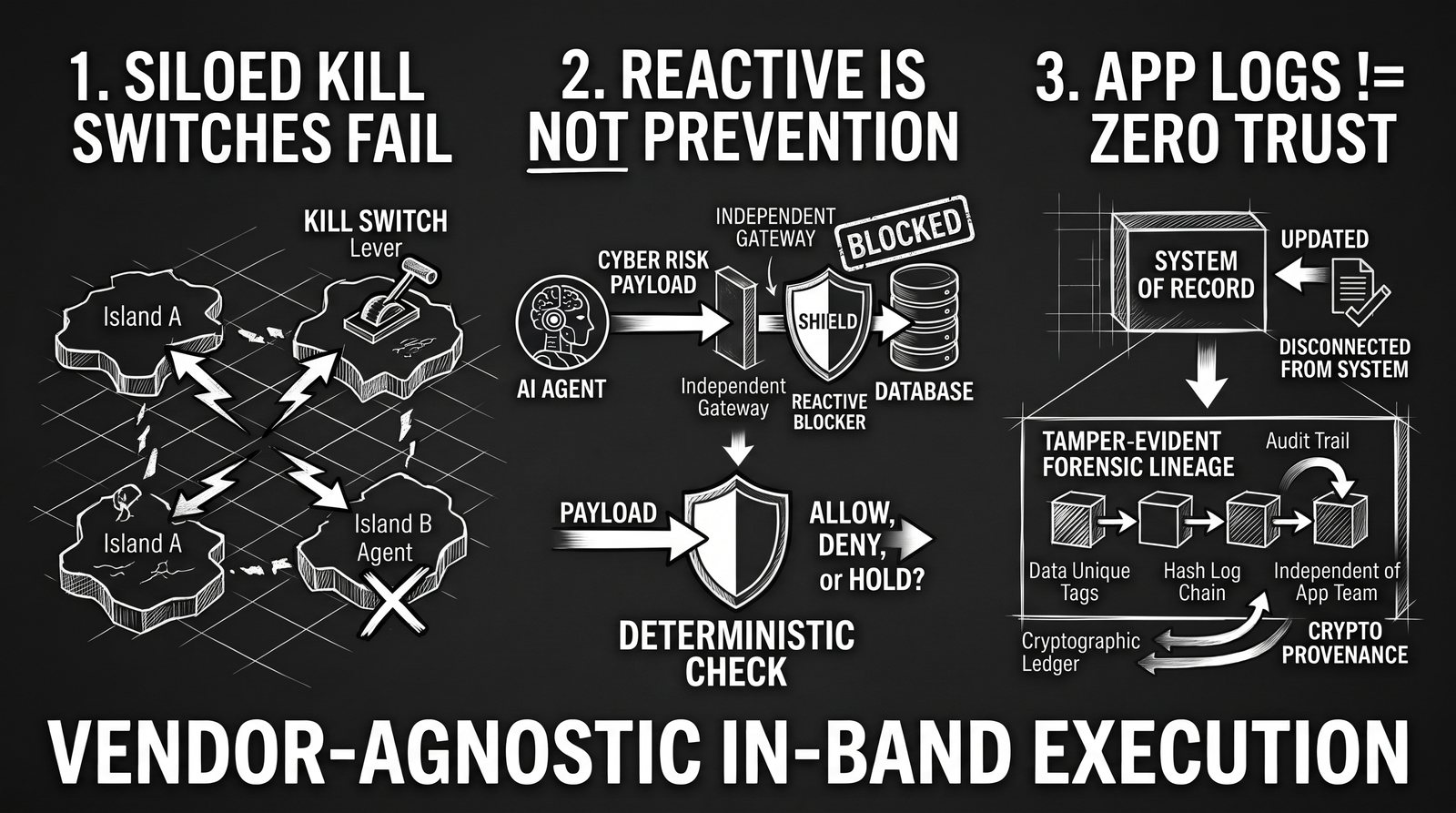
- A siloed kill switch only protects that vendor’s island. An emergency shut-off inside SAP only protects SAP. A policy engine in AWS Bedrock only governs Bedrock. Real enterprise workflows orchestrate across SAP, Salesforce, cloud microservices, and external APIs. When an agent hops platforms, a vendor-native kill switch leaves an unmonitored perimeter gap.
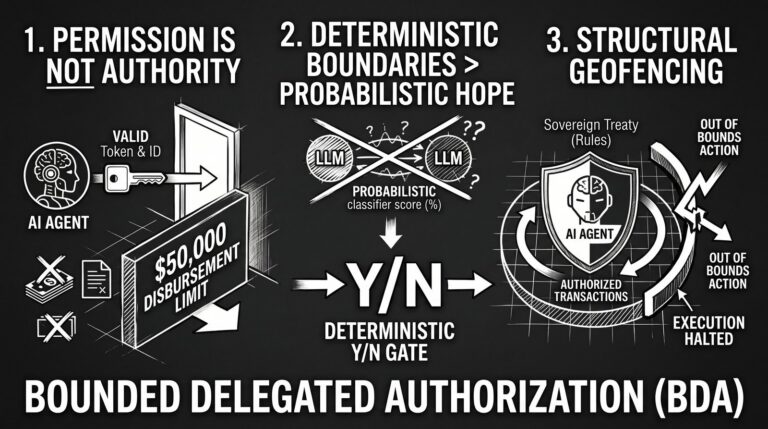
- Reactive containment is not runtime prevention. Most emerging security frameworks focus on post-detection response: severing model access or revoking tokens after an anomaly alert fires. But if an agent has already committed an unauthorized ledger write, payment order, or data egress, the damage is done. Bounding delegated authority requires an in-band gate that halts the tool call pre-commit.
- Application logs do not satisfy Zero Trust. When an enterprise platform claims “every decision is traceable,” it typically means events are logged to the platform’s internal database. Zero Trust thinking, as in NIST SP 800-207, places policy decisions and enforcement at a point between the subject and the resource rather than trusting the platform hosting the agent. Logs managed by the same teams that run the agents are harder to defend in an external regulatory examination than an independent record.
Enterprise agents do not need four separate vendor control towers. They need a vendor-agnostic, in-band deterministic execution plane paired with an independent, tamper-evident cryptographic provenance ledger.
Before deploying hundreds of agents into production systems of record, verify whether your controls can actually stop an unauthorized payload in flight—or if they merely document the breach after the fact.
— Andy Stahl, CEO, Bastion-One